Introduction
Updated on May 31, 2026, with the best indoor plants for cleaner air, easy-care recommendations, and practical tips for creating a fresher, healthier home.
Bringing plants indoors is one of the simplest ways to make a home feel more inviting. Beyond their appearance, many people choose indoor plants for cleaner air because they add a sense of freshness, soften living spaces, and help create a more relaxing environment.
Modern homes are often filled with electronics, synthetic materials, and limited airflow, which can make indoor spaces feel stuffy over time. While plants are not a replacement for proper ventilation, they can contribute to a healthier-feeling home while adding natural beauty to every room.
If you’re looking to create a greener lifestyle, you can also explore eco-friendly home swaps that pair well with natural, plant-filled living spaces.
Whether you have a small apartment, a home office, or a larger house, the right indoor plants for cleaner air can help transform your space into one that feels fresher, calmer, and more enjoyable to spend time in.
What are the best indoor plants for cleaner air?
The best indoor plants for cleaner air include Snake Plant, Peace Lily, Spider Plant, Areca Palm, Money Tree, and Dieffenbachia. These plants are popular because they are easy to care for, visually appealing, and help create a fresher, healthier-feeling indoor environment.
Quick Overview
| Plant | Main Benefit | Care Level | Best Spot |
|---|---|---|---|
| Anthurium | Adds color and helps maintain humidity | Easy | Living Room |
| Parlor Palm | Creates a fresh, tropical feel | Easy | Bedroom |
| Bromeliad | Adds moisture and visual interest | Medium | Living Room |
| Aglaonema | Thrives in low-light indoor spaces | Easy | Home Office |
| Dieffenbachia | Large foliage helps freshen indoor spaces | Medium | Living Room |
| Peace Lily | Popular for improving indoor air quality | Easy | Bedroom |
| Money Tree | Adds greenery with minimal maintenance | Easy | Living Room |
| Croton | Bright foliage adds color and energy | Medium | Bright Areas |
| Lucky Bamboo | Compact plant ideal for desks and shelves | Easy | Bedroom or Office |
Best Indoor Plants for Cleaner Air
Not every houseplant offers the same benefits. Some are chosen mainly for their appearance, while others are popular because they help create a fresher and more comfortable indoor environment.
The plants below are easy to maintain, work well in a variety of spaces, and are often recommended by homeowners looking for indoor plants for cleaner air.
You do not need to fill your home with greenery to notice a difference. Even adding one or two well-placed plants can make a room feel more inviting, relaxing, and connected to nature.
1. Anthurium – Bright and Fresh Look
Anthurium is one of those plants that immediately stands out.
Its glossy leaves and vibrant flowers bring a fresh and lively feel to any space without needing much effort. In many homes, it works as both a decorative piece and a functional plant.
It’s also a great option when you’re looking for indoor plants for cleaner air, especially because it helps maintain better humidity indoors. That small change can make the air feel more comfortable, especially in dry environments.
You’ll notice it works best in places where it can get some natural light, like near a window or in a well-lit living room.
If you enjoy styling your space, you can also explore DIY Home Decor Ideas to create a more aesthetic and personalized setup around your plants.
When it comes to care, Anthurium is fairly simple to manage. It prefers bright but indirect light, and the soil should be watered only when it starts to feel dry. Overwatering is the one thing to avoid, as it can affect the roots.
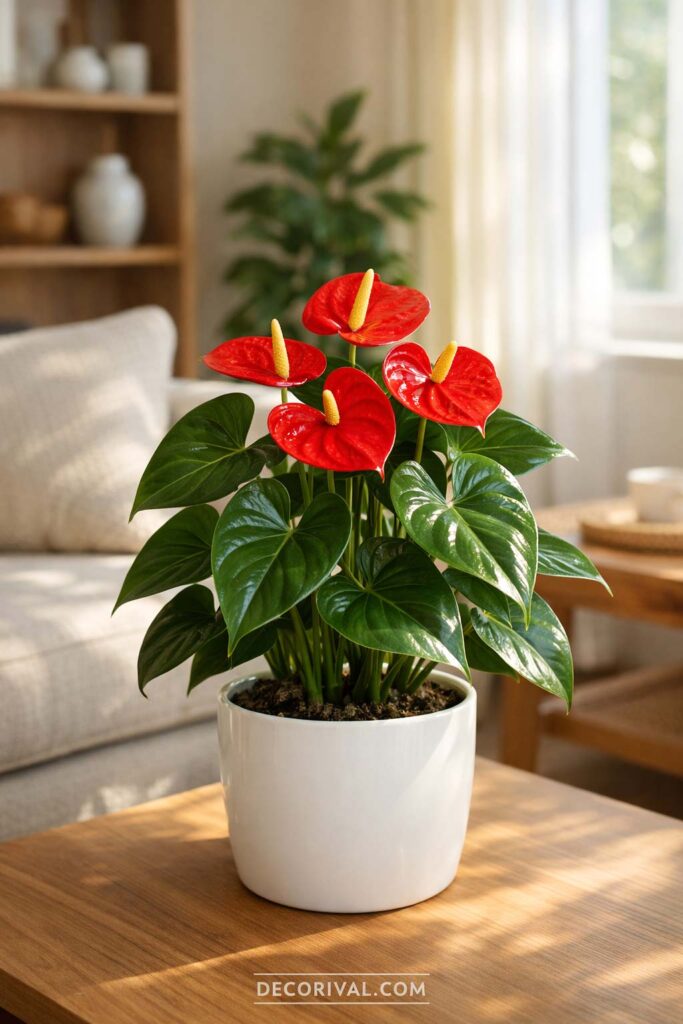
Anthurium Indoor Plants for Cleaner Air
2. Parlor Palm – Calm and Low Effort
If you don’t want to overthink plant care, this one makes life easy.
Parlor palm has a soft, airy look that quietly relaxes the room. It doesn’t demand attention, but it changes the feel of the space in a subtle way. That’s why it works well in bedrooms or those empty corners that feel a bit lifeless.
Among indoor plants for cleaner air, this one stands out because it adapts easily to indoor conditions without much effort. Even in low light, it continues to grow and adds a natural touch to your space.
It’s also very beginner-friendly. You don’t need a strict routine, just a simple setup where it can sit comfortably and grow.
If you’re styling your room around greenery, you can also explore wall color combinations to make your plants stand out more naturally.
For care, keep it in medium to low light and water it when the top layer of soil starts to dry. Avoid strong direct sunlight, as it can damage the leaves.
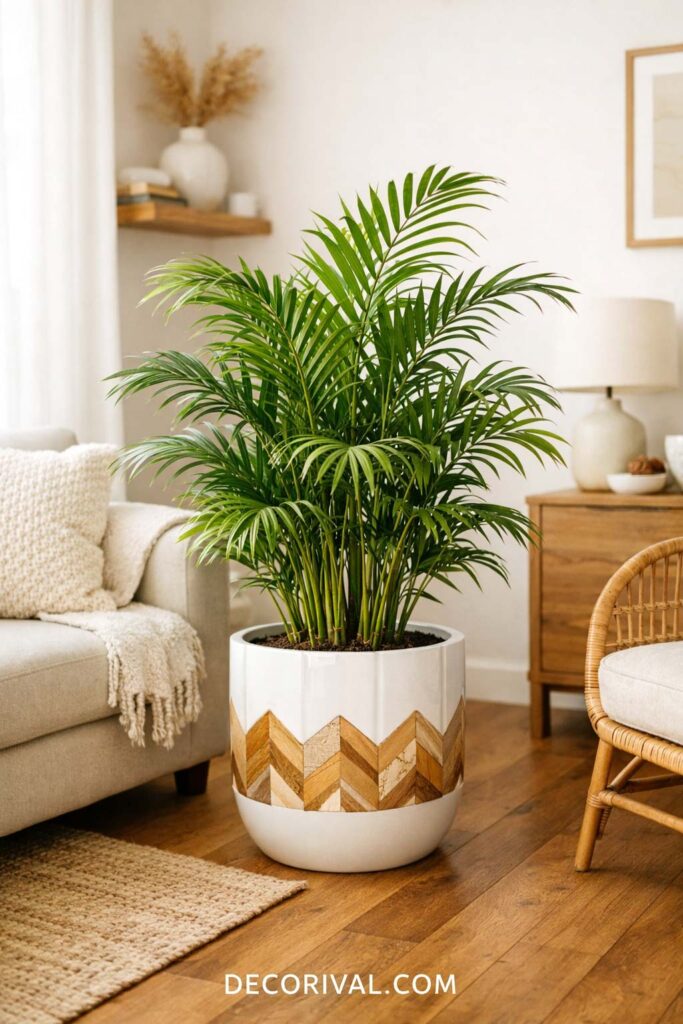
Parlor Palm Air Purifying Houseplant
3. Bromeliad – Bold and Different
Bromeliads don’t look like typical houseplants, and that’s exactly why they stand out.
With their bright colors and unusual shape, they add a focal point without needing extra decor around them. Even a single plant on a desk or shelf can make the space feel more alive and styled.
They’re also useful beyond looks. Like many indoor plants for cleaner air, bromeliads help maintain indoor humidity, which can make your room feel more comfortable, especially in dry environments.
You’ll often see them used in smaller spaces because they don’t need much room to create an impact. A coffee table, a bedside corner, or even a work desk is enough.
When it comes to care, they’re surprisingly low effort. They prefer bright but indirect light, and instead of watering the soil too often, it’s better to keep a little water in the center cup. Overwatering the soil is something to avoid.
If you’re planning to add a few plants together, watering can become a bit tricky over time. Using a self-watering indoor plant pot set can make things much easier. It helps maintain balanced moisture and works well if you don’t want to manage watering every day.
You don’t need to overdo it.
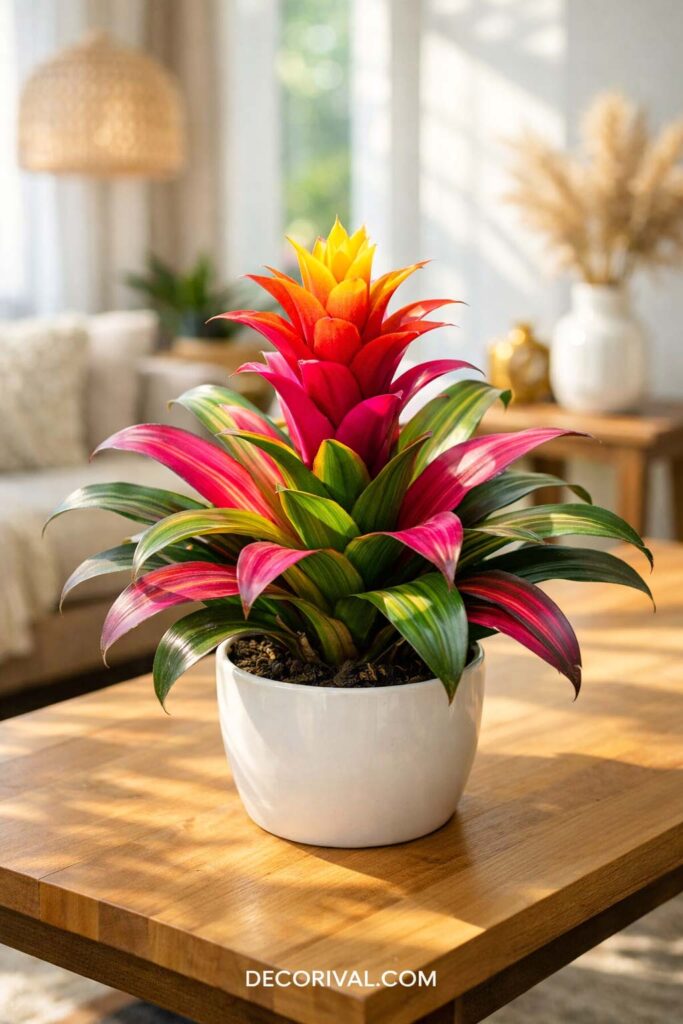
Colorful Bromeliad Indoor Plant
4. Aglaonema – Easy and Perfect for Low Light Spaces
Aglaonema, also known as Chinese Evergreen, is one of those plants that fit effortlessly into everyday spaces.
If your room doesn’t get much natural light but you still want something that looks good, this is a reliable choice. It adapts easily to indoor conditions, which is why it’s often included among indoor plants for cleaner air.
What makes it stand out is its foliage. The leaves have natural patterns in shades of green, silver, and sometimes soft pink, adding visual interest without making the space feel busy.
It works especially well in apartments, office desks, or corners that don’t receive direct sunlight. You don’t have to keep adjusting its position; it just settles in and grows.
Care is simple. Keep it in low to medium light and water it when the top layer of soil feels dry. One common mistake is overwatering, which can do more harm than good.
A useful tip: if the leaves start looking dull, it usually means the plant needs a bit more light, not more water. That’s where most people go wrong.
It’s low effort, dependable, and quietly improves the feel of your space.
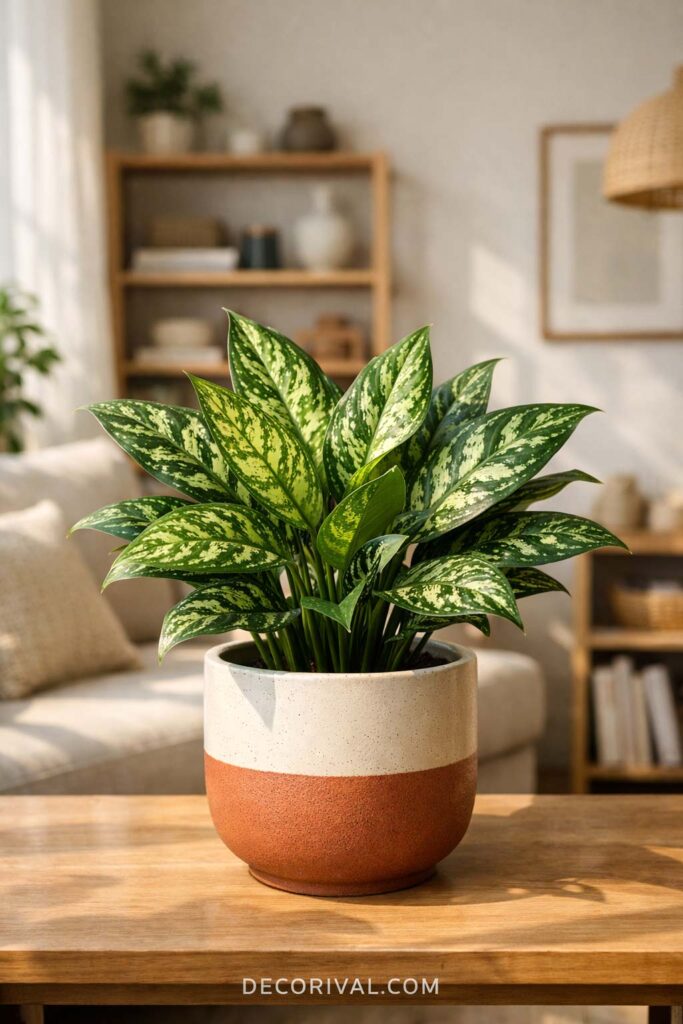
Aglaonema Indoor Plant
5. Dieffenbachia – A Statement Plant That Fills Empty Corners
Some plants blend into the background, but Dieffenbachia does the opposite. Its large patterned leaves naturally draw attention and can make a room feel more finished without needing additional decor.
This plant is especially useful in spaces that feel a little empty or lack visual interest. A single Dieffenbachia placed beside a sofa, near a reading chair, or in an unused corner can add color, texture, and height to the room.
Many people include it in collections of indoor plants for cleaner air because its broad foliage helps create a fresher, more vibrant atmosphere indoors while adding a strong decorative element.
Despite its bold appearance, it is fairly easy to maintain. It prefers bright, indirect light and grows best when the soil is allowed to dry slightly between waterings.
One common mistake is watering too often. If the leaves begin turning yellow, excess moisture is usually the first thing to check. Giving the soil more time to dry can often solve the problem before it becomes serious.
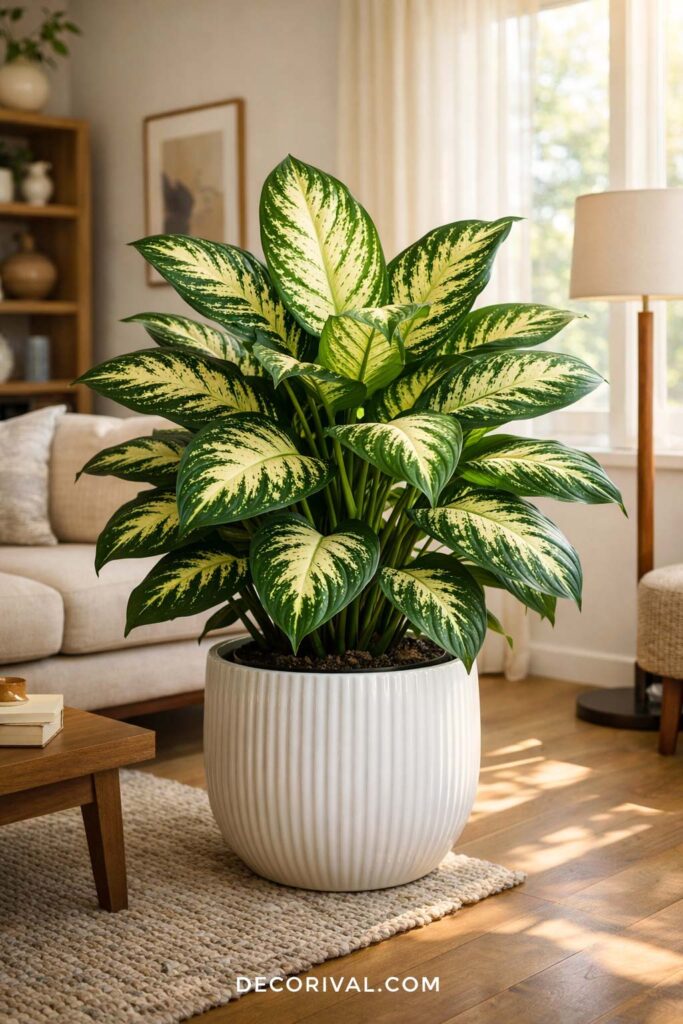
Dieffenbachia Indoor Air Purifying Plant
6. Peace Lily – Calm, Clean, and Elegant
Peace Lily is one of those plants that instantly softens a room.
The white flowers and deep green leaves give it a clean and relaxed look, which is why it’s often recommended among indoor plants for cleaner air, especially for bedrooms.
It works really well on a bedside table or a small corner shelf where you want a calm vibe without adding too much.
You don’t have to do much to keep it healthy. Low to medium light is enough, and watering only when the soil feels dry usually works fine.
Real tip: if you forget to water it, the leaves will droop and tell you directly. The good thing is, it recovers quickly once you water it again.
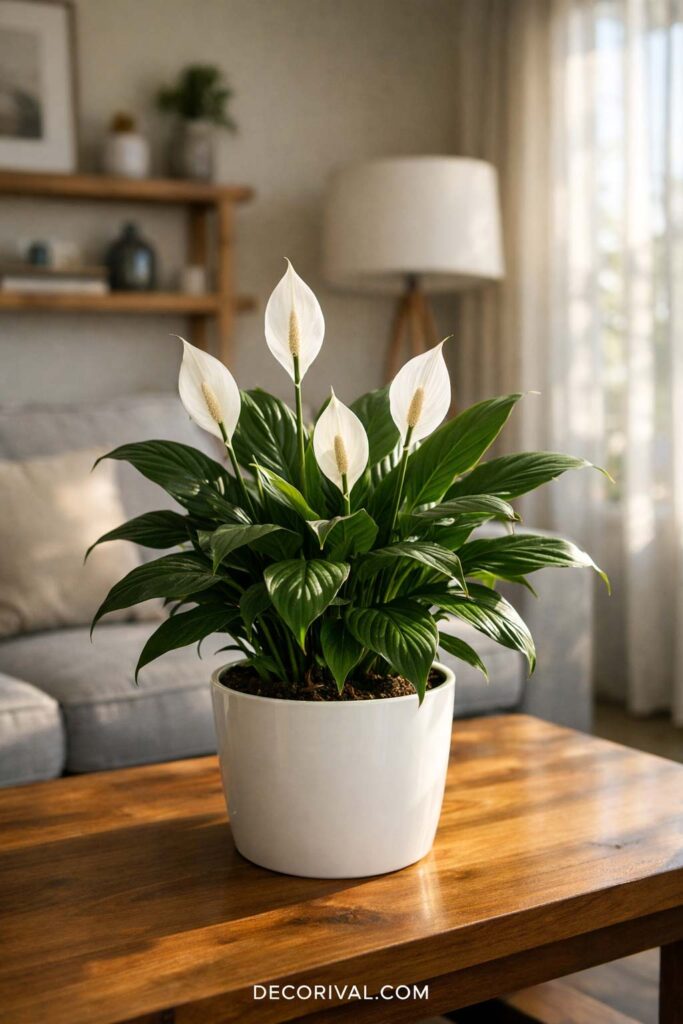
Peace Lily Indoor Plant
7. Money Tree – Clean Look with a Positive Vibe
The Money Tree is a popular choice for people who want a plant that looks neat without demanding too much attention.
Its braided trunk and tidy shape give it a structured appearance that works especially well in modern homes, offices, and minimalist spaces. Among many indoor plants for cleaner air, it stands out because it adds greenery without making a room feel crowded.
A Money Tree fits naturally near an entryway, beside a desk, or in a bright corner where you want a little extra life and texture. Its balanced shape can also help a space feel more polished and put together.
Another reason people like this plant is that it is relatively easy to care for. It prefers bright, indirect light and only needs watering when the top layer of soil starts to dry out.
If you notice leaves dropping, do not panic. In many cases, the issue is simply overwatering or insufficient light. Adjusting those conditions is often enough to help the plant recover and continue growing well.
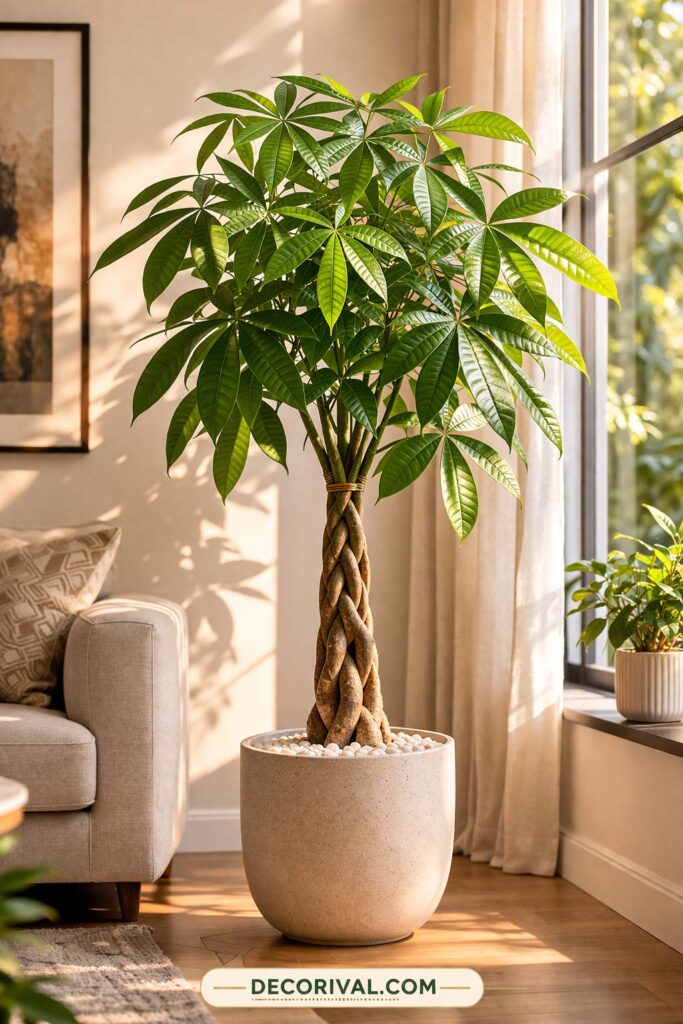
Money Tree Indoor Plant
8. Croton – Bold Color and Strong Presence
If your room feels a little dull or too neutral, Croton is the kind of plant that can instantly fix that.
It’s all about color. The mix of red, yellow, orange, and green makes it stand out without needing anything else around it. Even a single Croton can make a corner feel more alive.
Among indoor plants for cleaner air, this one is often picked not just for function but for how much personality it brings into a space. It works especially well in living rooms where there’s enough natural light.
You’ll notice the difference quickly if you place it near a window or in a bright corner. That’s where its colors really come through.
Care is slightly different compared to low-light plants. It needs bright light to maintain those vibrant shades. Water it regularly, but don’t let the soil stay soggy.
Real tip: if the colors start fading or the leaves look dull, it’s usually not getting enough light. Moving it to a brighter spot fixes most problems.
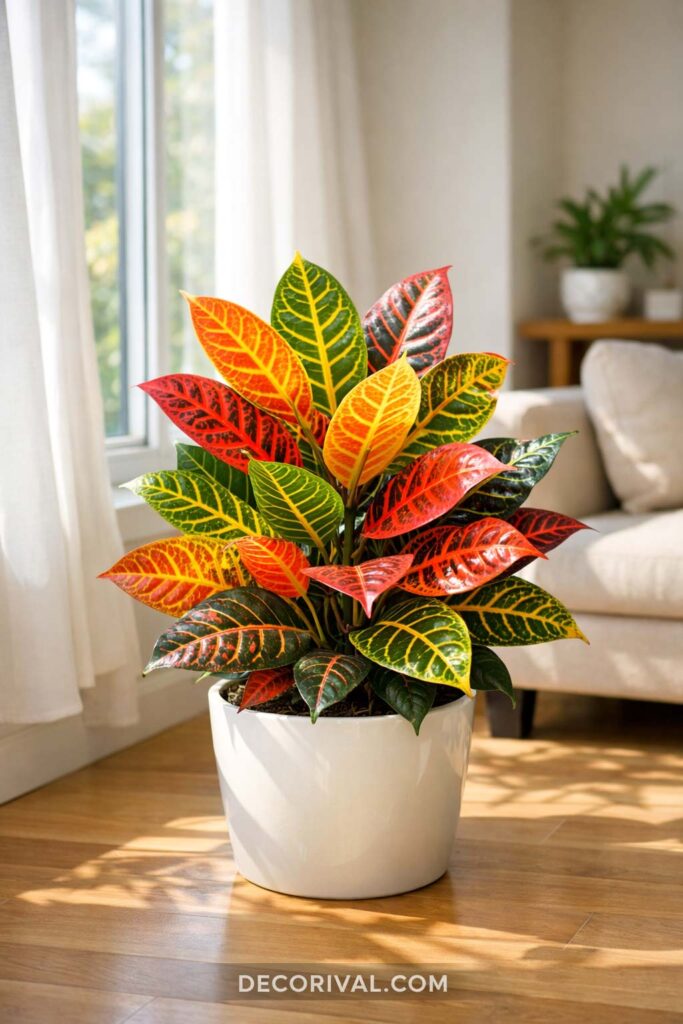
Croton Decorative Indoor Plant
9. Lucky Bamboo – Simple and Minimal
Lucky Bamboo is about simplicity.
It doesn’t try to stand out, but it still improves how your space feels. With its clean lines and minimal look, it fits perfectly into modern setups, especially desks or small shelves.
Among indoor plants for cleaner air, this is one of the easiest to maintain. You don’t even need soil if you don’t want it. It can grow in water, which makes it a great option for beginners or busy routines.
It works best in spaces where you want things to feel organized and uncluttered. A work desk, entry table, or bedside shelf is usually enough.
Care is very straightforward. Keep it in indirect light and avoid placing it under harsh sunlight. If you’re growing it in water, just change the water once a week to keep it fresh.
Real tip: if the leaves start turning yellow, it’s often because of too much direct sunlight or poor-quality water. Switching to filtered water usually helps.
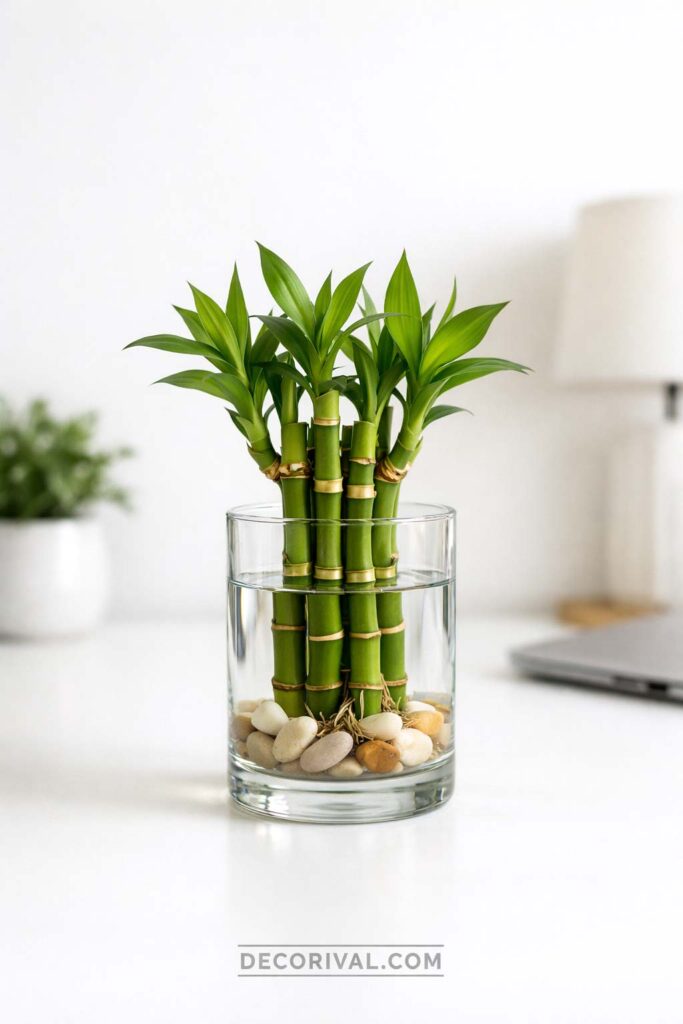
Lucky Bamboo Indoor Plant
Simple Tips for Healthier Indoor Plants
A few small habits can make a big difference in how your plants grow and look over time.
Place plants where you spend the most time rather than hiding them in unused corners. A well-positioned plant near a desk, reading chair, or bedside table often has a greater impact on the feel of a room.
Avoid overwatering, which is one of the most common plant-care mistakes. Most indoor plants prefer the soil to dry slightly between waterings rather than staying constantly wet.
It also helps to rotate plants every few weeks so they grow more evenly toward the light. Cleaning dust from the leaves occasionally can keep them looking fresh and healthy.
Quick Placement Guide
Choosing the right location is often more important than choosing the right plant.
- Bedroom: Peace Lily, Parlor Palm, or Lucky Bamboo
- Living Room: Money Tree, Dieffenbachia, or Croton
- Home Office: Aglaonema or Lucky Bamboo
- Bright Kitchen Areas: Anthurium or Bromeliad
Matching the plant to the available light and space will usually lead to better results than trying to force a plant into the wrong environment.
Frequently Asked Questions
What are the best indoor plants for cleaner air?
Some of the most popular indoor plants for cleaner air include Peace Lily, Snake Plant, Parlor Palm, Aglaonema, Money Tree, and Lucky Bamboo. These plants are easy to maintain and work well in a variety of indoor spaces.
Do indoor plants really help improve indoor air quality?
Indoor plants can contribute to a fresher-feeling environment by adding humidity and bringing natural greenery into the home. While they are not a substitute for proper ventilation, they can help create a more comfortable and inviting indoor space.
Which indoor plants are easiest for beginners?
Aglaonema, Lucky Bamboo, Snake Plant, and Money Tree are excellent choices for beginners because they adapt well to indoor conditions and require relatively little maintenance.
Conclusion
Choosing the right indoor plants for cleaner air is a simple way to make your home feel fresher, more inviting, and more connected to nature.
Whether you prefer low-maintenance plants like Snake Plant and Money Tree or statement plants such as Dieffenbachia and Peace Lily, the key is selecting options that fit your space and lifestyle.
Even a few carefully placed plants can enhance the overall atmosphere of a room while adding natural texture and visual interest.
As you build your indoor plant collection, focus on creating a healthy, comfortable environment that feels enjoyable to live in every day. For more practical home and decor inspiration, explore Decorival.com.