Introduction
A living room is usually the first place where a home starts to feel like a home. It is where you sit after a long day, welcome guests, watch movies, drink coffee, talk with family, or simply relax for a few quiet minutes.
But designing a living room is not always as easy as it looks.
Sometimes the furniture is good, but the room still feels incomplete. Sometimes the sofa feels too big, the rug looks too small, the wall behind the TV feels empty, or the colors do not feel connected. You may keep adding decor, cushions, lamps, or wall art, but the space still does not feel balanced.
This usually happens because a living room needs more than just beautiful pieces. It needs a clear plan.
A good Living Room Design Guide helps you understand how layout, furniture, decor, lighting, and colors work together. Instead of choosing random ideas from different styles, it gives your room a direction so every detail feels connected and useful.
In this Living Room Design Guide, you will learn how to plan a modern living room step by step, from choosing the right layout and decor style to picking colors, furniture, lighting, and finishing touches that make the space feel calm, comfortable, and complete.
What Is the Best Way to Design a Living Room?
The best way to design a living room is to start with the layout, choose a clear decor style, select a balanced color palette, add practical furniture, layer the lighting, and finish with simple decor. A good living room should feel comfortable, easy to move around in, visually balanced, and connected to the rest of the home.
What Is a Good Living Room Design?
A good living room design is not just about choosing a beautiful sofa or adding trendy decor. It is about how everything works together. The room should feel comfortable to sit in, easy to move around, and pleasant to use every day.
A well-designed living room has a natural balance. The seating feels inviting, the furniture does not block movement, the colors feel connected, and the lighting feels soft but useful. There should also be enough storage, but not so much that the room starts to feel heavy or crowded.
Most importantly, the room should match the way you actually live.
A family living room may need durable seating, easy storage, and open walking space. A small apartment may need compact furniture, hidden storage, and light colors. A modern luxury living room may focus more on symmetry, layered lighting, rich textures, and statement pieces.
That is why one design idea does not work for every home. A strong Living Room Design Guide should help you understand your own space first, before choosing furniture, colors, or decor.
Before buying anything, ask yourself one simple question: What is this room mainly used for?
Maybe it is for watching TV, relaxing after work, hosting guests, reading, working from home, or spending time with family. Once you understand the purpose, design decisions become much easier.
A good living room design should balance comfort, function, visual flow, and personality. If one of these is missing, the room may look nice in photos but may not feel right in real life.
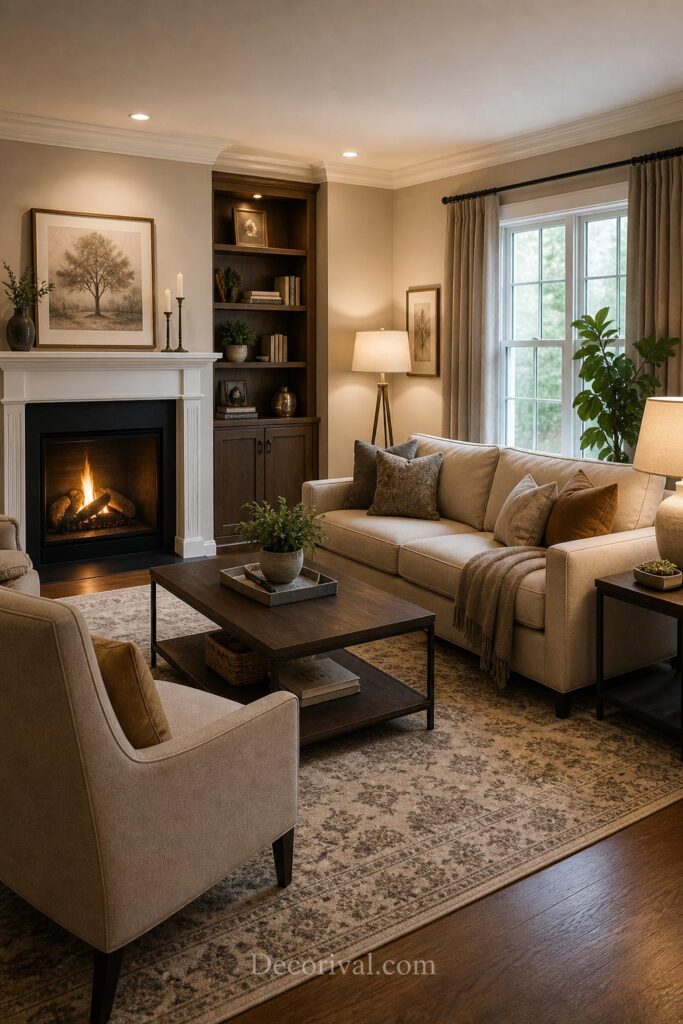
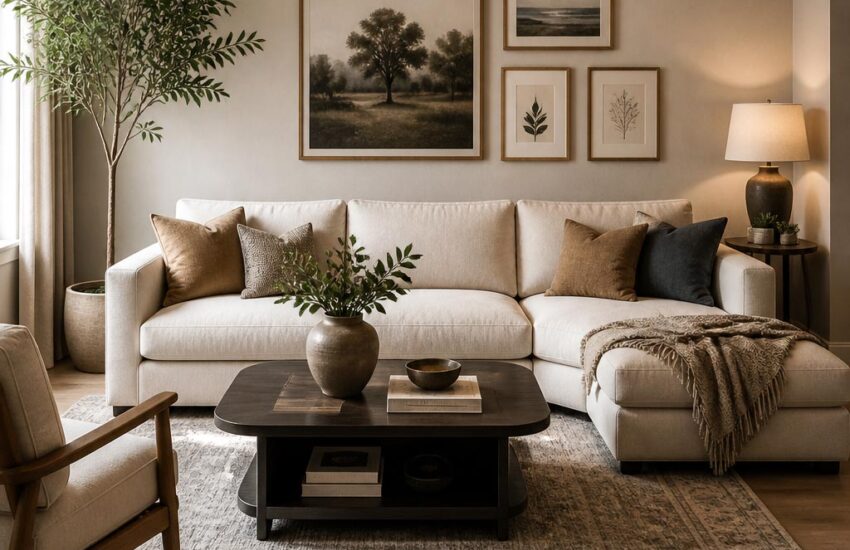
Cozy Balanced Modern Living Room Design
Start with the Right Living Room Layout
The layout is the foundation of your living room. If the layout is wrong, even expensive furniture and beautiful decor can feel out of place. But when the layout is right, even a simple room can look stylish, balanced, and well planned.
Start by looking at the shape of your room. Is it square, narrow, open, long, or connected to a dining area? Then notice the fixed elements, such as doors, windows, the TV wall, balcony opening, fireplace, or built-in storage.
Your goal is to create a natural flow. People should be able to walk through the room without bumping into furniture. The seating should feel connected, not scattered. The main focal point should also be clear, whether it is the TV, a window, a fireplace, or an accent wall.
One common mistake is pushing every piece of furniture against the wall. This can work in some small rooms, but in larger spaces, it often makes the middle of the room feel empty. Instead, try to create a proper seating zone where the sofa, chairs, rug, and coffee table feel connected.
The easiest layout formula is simple: place the largest seating piece first. Then add the rug, coffee table, side tables, lighting, and decor around it. This way, the room feels planned instead of randomly filled.
Small Living Room Layout
A small living room needs smart planning. The goal is not to fit as much furniture as possible. The real goal is to make the room feel open, calm, and useful without making it look crowded.
Start with a sofa that matches the scale of the room. A compact three-seater, loveseat, or slim sectional can work better than a bulky sofa. Furniture with visible legs is also helpful because it allows more floor space to show, which makes the room feel lighter.
Use one large rug instead of several small rugs. A larger rug creates visual unity and makes the seating area feel more intentional. If the rug is too small, the whole room can look smaller and disconnected.
In a small space, every piece should have a purpose. Wall-mounted shelves, floating TV units, nesting tables, and storage ottomans are smart choices because they add function without taking up too much floor area.
For very tiny rooms, keep the color palette soft and simple. Light beige, warm white, soft grey, cream, and pale sage can make the room feel more open. Instead of using too many bold colors, add warmth through cushions, curtains, rugs, baskets, and natural textures.
A good Living Room Design Guide always focuses on balance first. In a small living room, that means choosing fewer pieces, keeping the walking path clear, and using colors and furniture that help the space feel bigger instead of heavier.
If your space is very limited, you can take inspiration from tiny living room layout ideas and adapt the ones that best fit your room shape and daily needs.
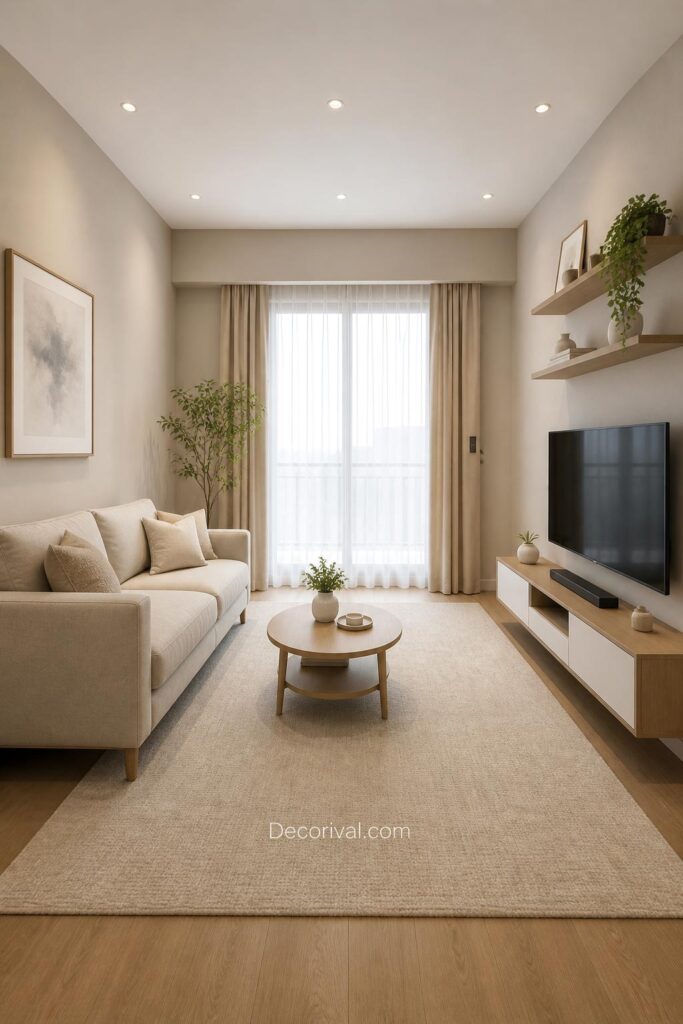
Small Living Room Layout Idea
Open Living Room Layout
An open living room can make a home feel larger, brighter, and more welcoming, but it works best when each area has a clear purpose.
When the living room, dining space, and kitchen are all visible at the same time, the layout can quickly start to feel busy if there is no structure. The goal is to create separation without losing the openness that makes the space appealing in the first place.
One of the easiest ways to do this is by creating soft visual zones. A large area rug can define the seating area, while a pendant light above the dining table naturally marks the dining space. Even the placement of a sofa can help separate areas without blocking light or movement.
Keeping a consistent color palette throughout the space also helps everything feel connected. For example, if the living room features warm wood tones and neutral fabrics, repeating similar colors in the dining area creates a smoother transition between zones.
Lighting is another important element. A floor lamp beside the sofa, a pendant over the dining table, and layered lighting throughout the room help each area feel intentional while maintaining a cohesive look.
In smaller apartments, furniture selection matters just as much as placement. Compact dining tables, slim consoles, and lightweight seating often work better than oversized pieces because they keep pathways open and preserve valuable floor space.
If you’re planning a larger refresh, our Living Room Design Guide offers additional ideas for furniture placement, room flow, color coordination, and creating a living space that feels both functional and inviting.
The best open living room layouts do not try to separate every area completely. Instead, they give each zone a purpose while keeping the overall space bright, connected, and easy to move through.
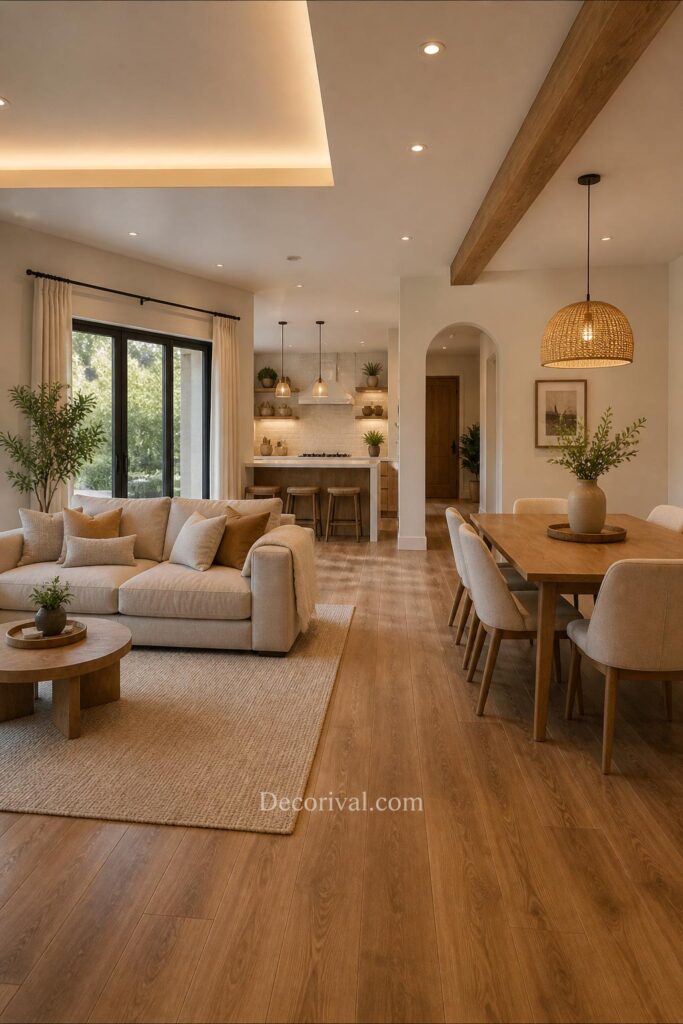
Open Living Room Layout with Dining Area
Living Room with TV Layout
In many homes, the television naturally becomes the focal point of the living room. Whether you’re watching movies, following your favorite shows, or spending time with family, the layout should feel comfortable without allowing the TV to dominate the entire space.
A good setup starts with proper placement. The sofa should be positioned at a comfortable viewing distance, and the screen should sit close to eye level when seated. This creates a more relaxed viewing experience and helps the room feel balanced.
The furniture around the TV matters as well. A media console that matches the scale of the television can help anchor the wall and provide useful storage for remotes, gaming devices, and everyday essentials. Closed storage is often a better choice because it reduces visual clutter and keeps the area looking organized.
When decorating the TV wall, less is usually more. A few floating shelves, subtle lighting, or simple wall details can add character without making the space feel crowded. Leaving some open wall space often creates a cleaner and more modern look.
One of the key principles in any Living Room Design Guide is creating a TV area that feels connected to the rest of the room instead of dominating it. When furniture, lighting, and storage work together, the entire space feels more comfortable and visually balanced.
The best TV layouts strike a balance between comfort and design. The television should feel integrated into the room rather than becoming the only feature people notice when they walk in.
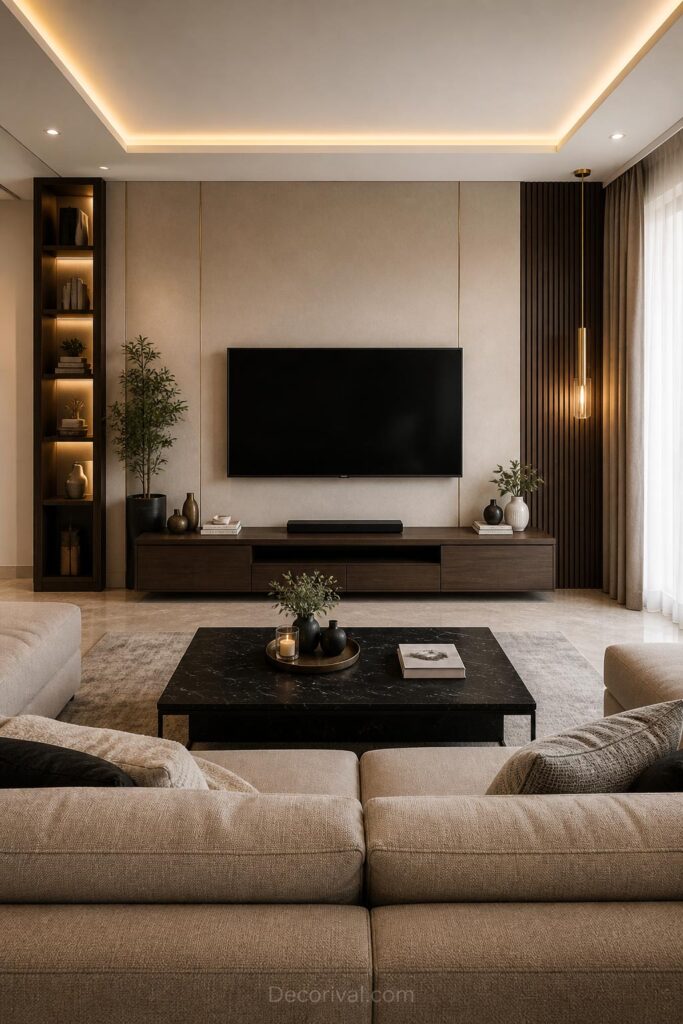
Modern Living Room with TV Wall Layout
Choose a Living Room Decor Style
Once your layout is clear, the next step is choosing a decor style. This does not mean your living room has to follow one strict theme. It simply gives the space a clear direction, so your furniture, colors, and decor feel connected.
Without a style direction, the room can easily feel random. You may choose a modern sofa, a farmhouse coffee table, a boho rug, a luxury chandelier, and minimalist shelves. Each piece may look good on its own, but together they may not create the right feeling.
That is why it helps to choose one main style first. You can also add one supporting style if needed, such as modern Scandinavian, minimalist farmhouse, or soft luxury modern.
The goal is not to copy one style perfectly. The goal is to create a living room that feels balanced and natural for your home.
A good Living Room Design Guide should help you choose a style that matches your lifestyle, not just what looks beautiful in photos.
Modern Living Room Design
Modern living room design is clean, practical, and simple. It usually includes straight lines, neutral colors, sleek furniture, open space, and clutter-free surfaces.
But modern does not have to mean cold.
You can make a modern living room feel warm by adding wood tones, textured rugs, linen curtains, soft cushions, indoor plants, and warm lighting. These small details stop the room from feeling too plain.
Modern design works well for apartments, city homes, open layouts, and people who prefer simple spaces. It also pairs nicely with luxury details like marble textures, brass accents, black metal, statement lighting, and a clean TV wall.
To create a modern living room, focus on fewer but better pieces. Choose a comfortable sofa, a simple coffee table, one large rug, layered lighting, and balanced wall decor. Avoid filling every corner just because there is space.
In modern design, space is not a problem. It helps the room breathe.
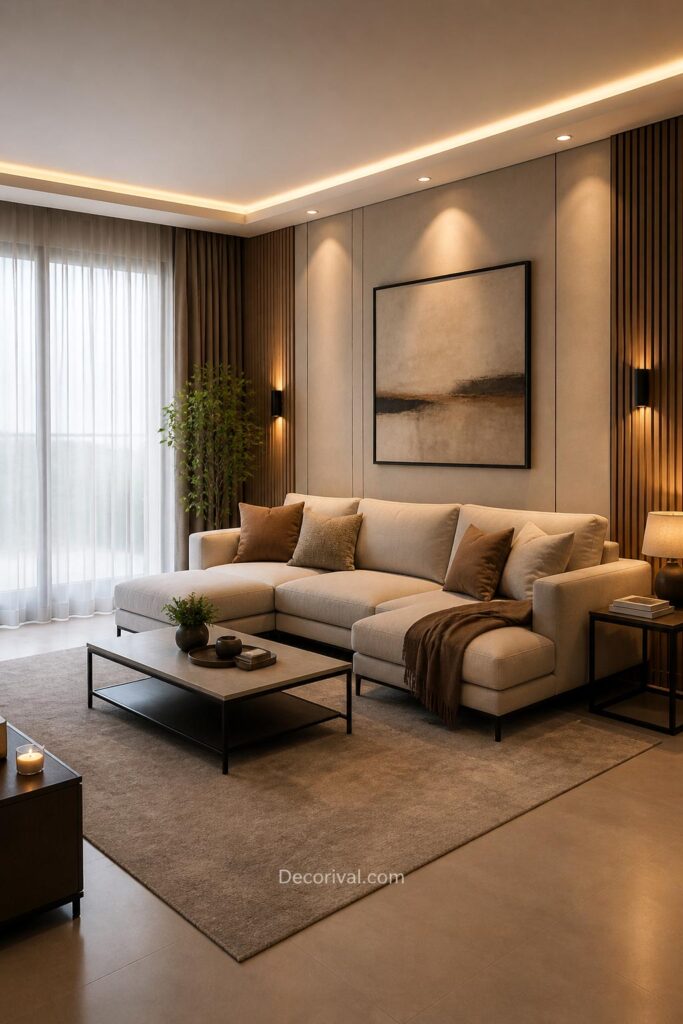
Modern Living Room Design Inspiration
Scandinavian Living Room Design
Scandinavian living room design is one of the best choices for modern homes because it feels calm, cozy, and minimalist. It usually includes light wood, soft neutral colors, simple furniture, natural textures, and plenty of natural light.
The best thing about Scandinavian design is that it does not feel forced. It looks simple, but not boring. It feels clean, but still warm. That is why it works so well in small apartments, family homes, and modern spaces.
A Scandinavian living room often features colors such as white, cream, beige, soft grey, pale green, and warm wood tones. The furniture is usually slim, practical, and easy to live with. Decor is minimal, but it still feels personal.
To create this look, add a soft rug, linen curtains, a light wood coffee table, cozy throw blankets, and a few indoor plants. Keep the walls clean, but you can add a small gallery wall if it feels balanced.
If your home is small, you can explore Scandinavian home decor for small apartments as a helpful reference because this style works especially well in compact spaces with clean layouts, light colors, and simple furniture.
This section fits well in a Living Room Design Guide because Scandinavian style is not only about decoration. It also teaches you how to make a room feel lighter, calmer, and more useful without adding too much.
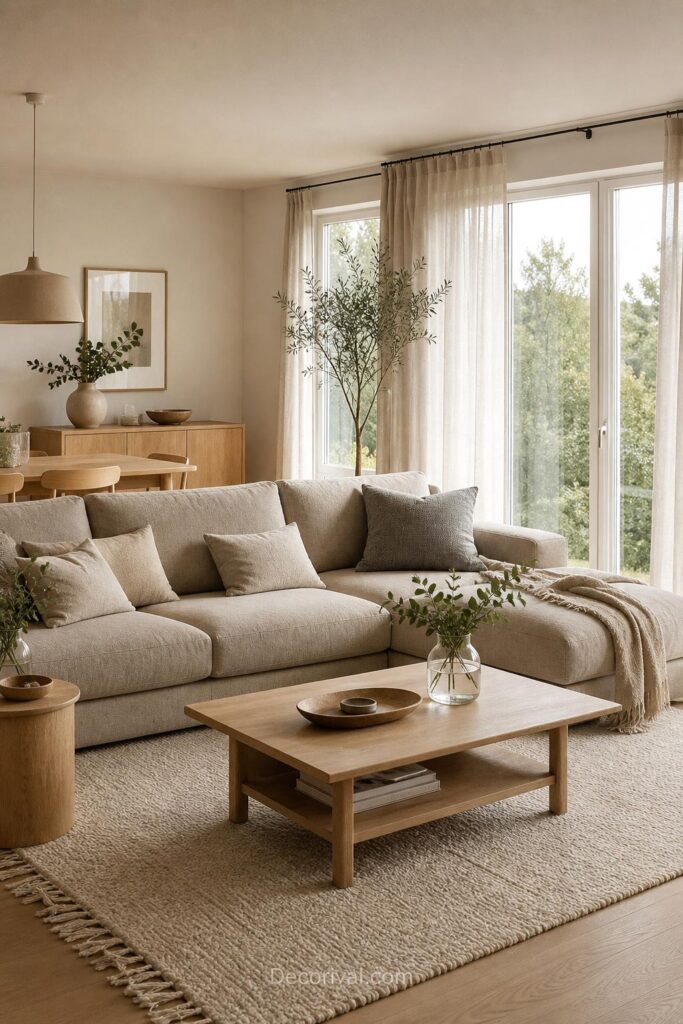
Scandinavian Living Room Design for a Cozy Modern Home
Minimalist Living Room Design
Minimalist living room design is about creating calm through simplicity. It does not mean your living room should feel empty, cold, or unfinished. A well-designed minimalist space still feels warm and comfortable; it simply removes unnecessary distractions.
The goal is to reduce visual clutter and focus on the elements that truly matter. When there are fewer competing items, details like lighting, textures, furniture, and artwork have more room to stand out.
A limited color palette often works best. Soft white, beige, warm gray, cream, taupe, and light wood tones help create a clean and cohesive look. Furniture should have simple lines and practical functionality rather than overly decorative details.
Surfaces are equally important. Instead of filling a coffee table with multiple accessories, consider one vase, a favorite book, or a simple decorative tray. Likewise, a single statement artwork or mirror often has more impact than several smaller pieces competing for attention.
Storage also plays a major role. Closed cabinets, storage ottomans, and woven baskets help keep everyday items out of sight while maintaining a tidy appearance.
In a practical Living Room Design Guide, minimalist design teaches an important lesson: a room does not need more decor to feel complete. It often needs fewer, better-chosen pieces.
If you’d like to explore this style further, our Minimalist Living Room Ideas guide shares simple ways to create a calm, clutter-free space without sacrificing comfort or personality.
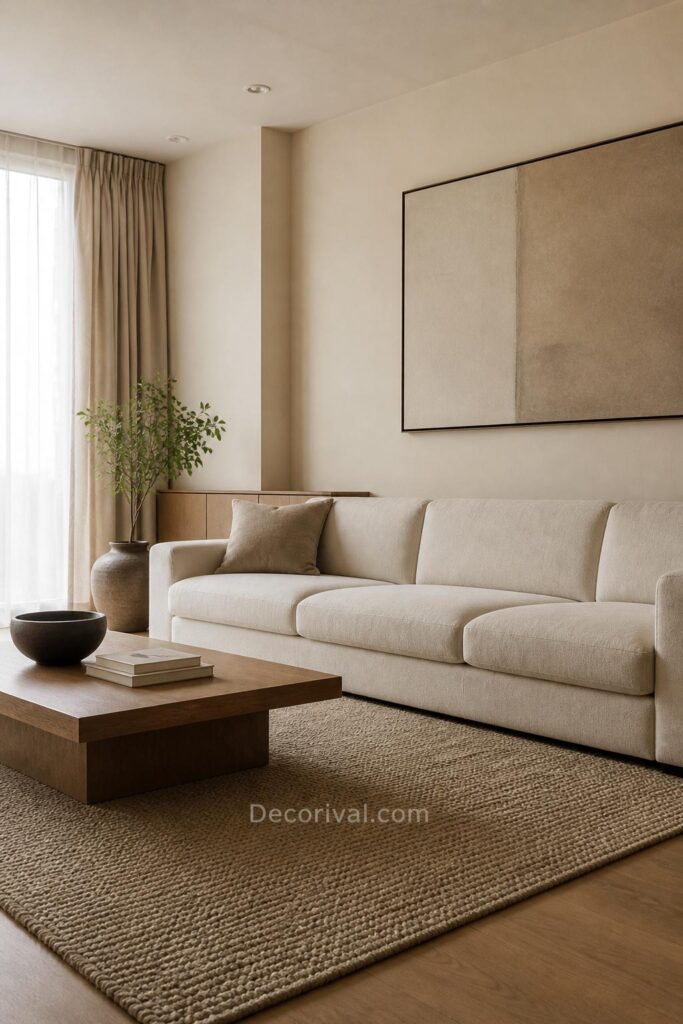
Minimalist Living Room Design Ideas
Farmhouse Living Room Design
Farmhouse living room design feels warm, relaxed, and welcoming. It is the kind of style that makes a room feel comfortable without trying too hard. Natural wood, soft fabrics, woven textures, neutral colors, and cozy lighting are usually the main elements.
Modern farmhouse design is cleaner than traditional farmhouse style. It still has warmth and character, but it avoids too many heavy rustic details. Instead of filling the room with signs, distressed furniture, or too many vintage pieces, use a softer approach.
Start with a neutral sofa, a wood coffee table, a woven rug, linen curtains, and warm lighting. Then add a few farmhouse touches, such as a woven basket, ceramic vase, rustic shelf, textured throw, or natural wood accent.
The best farmhouse living rooms feel collected over time, not decorated all at once. They have personality, but they do not feel crowded. To keep the look modern, balance rustic details with clean lines.
Farmhouse style works well in a Living Room Design Guide because it shows how comfort and style can work together without making the room too busy.
If you want this style to feel cozy and stylish, you can explore farmhouse living room ideas to see how warm textures and simple decor create a comfortable and inviting space.
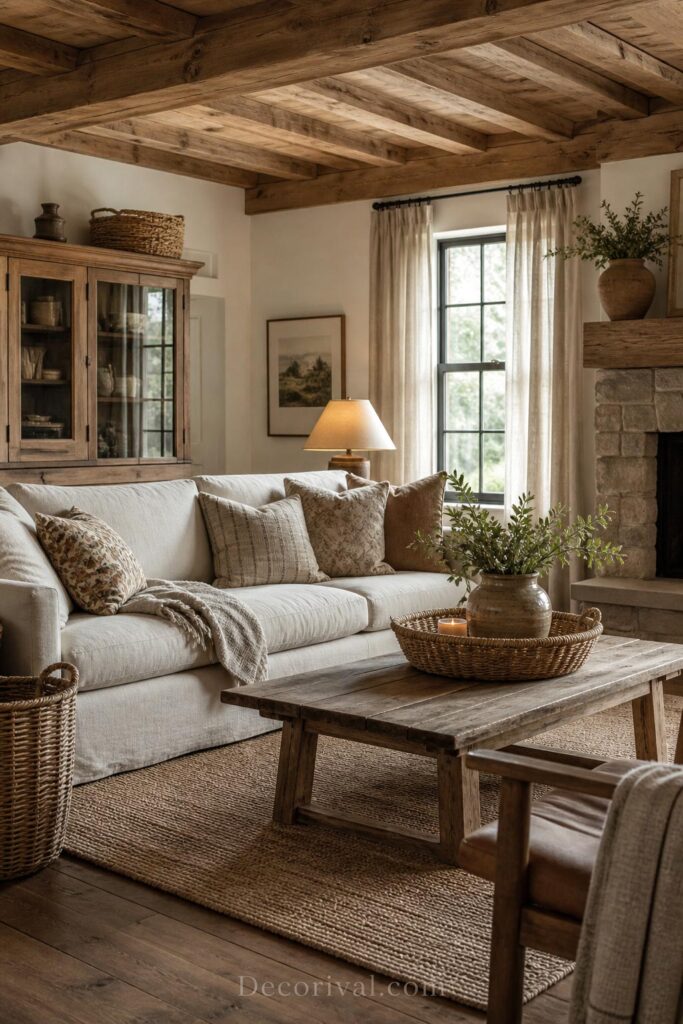
Cozy Farmhouse Living Room Design
Boho Living Room Design
Boho living room design is relaxed, creative, and full of texture. It often includes plants, rattan, woven rugs, patterned cushions, layered textiles, handmade decor, and warm, earthy colors.
The biggest mistake with boho design is adding too many patterns and colors at once. A modern boho living room should still feel balanced. Start with a calm base, then add personality through decor.
A neutral sofa, wood or rattan furniture, a textured rug, and warm lighting can create the foundation. After that, you can add plants, cushions, baskets, wall hangings, ceramics, or handmade pieces.
Boho works especially well for people who want a living room that feels personal and lived-in. It does not need to look perfect. In fact, boho style looks better when it feels natural.
If you want to explore this style in more detail, you can check cozy boho living room ideas to see how layered textures and relaxed decor create a warm and stylish space.
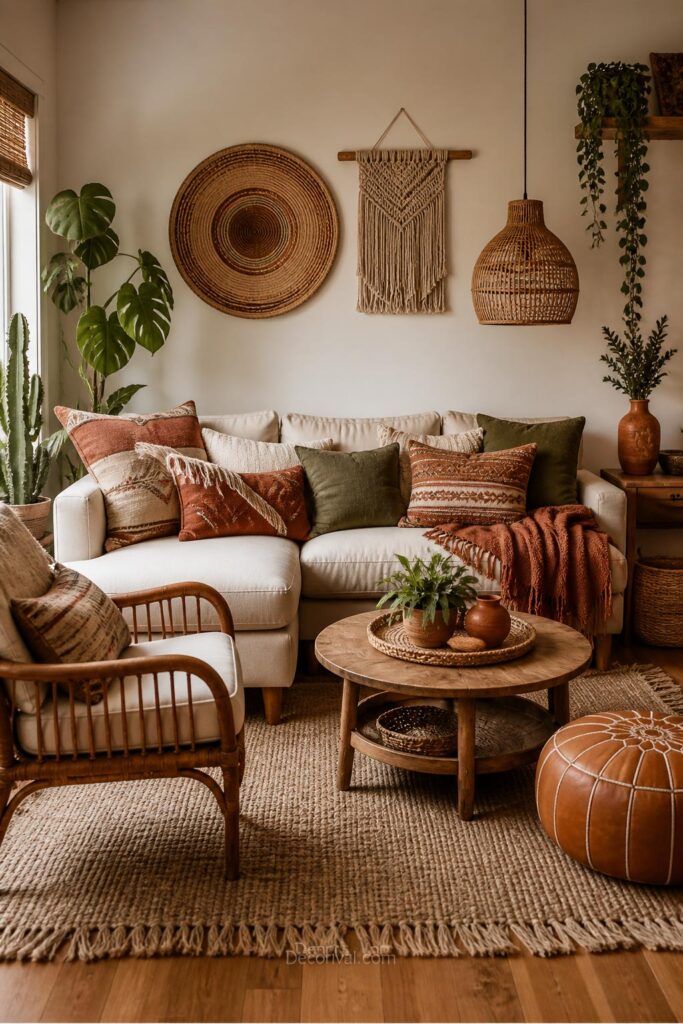
Warm Boho Living Room Design
Best Living Room Color Ideas for Modern Homes
Color can completely change how a living room feels. The same room can look calm, cozy, modern, dramatic, or luxurious depending on the palette you choose.
A good color palette usually has three parts: a base color, a supporting color, and an accent color.
The base color covers the largest areas, such as walls, sofa, curtains, or rug. The supporting color appears in furniture, cushions, chairs, or decor. The accent color adds contrast through smaller details.
For modern homes, neutral colors are usually the safest foundation. White, cream, beige, taupe, warm grey, and greige can make the room feel calm and flexible. After that, you can add colors like sage green, navy, charcoal, terracotta, turquoise, black, or gold.
If your living room is small, use lighter colors on larger surfaces. A cream wall, beige sofa, and light rug can make the room feel more open. Then add depth with wood tones, black metal, plants, or textured fabrics.
For an elegant living room, try combinations like beige with white and brass, soft grey with turquoise and warm wood, sage green with cream and oak, charcoal with beige and gold, or warm white with black and brown.
The most important rule is to avoid using too many colors at once. A modern living room usually looks better when the palette feels controlled. If you want to refine your palette, you can explore living room color combinations to see how the right mix of tones can make a space feel more polished and cohesive.
A practical Living Room Design Guide should help you choose colors that match your room size, lighting, furniture, and personal style, not just what looks good in a photo.
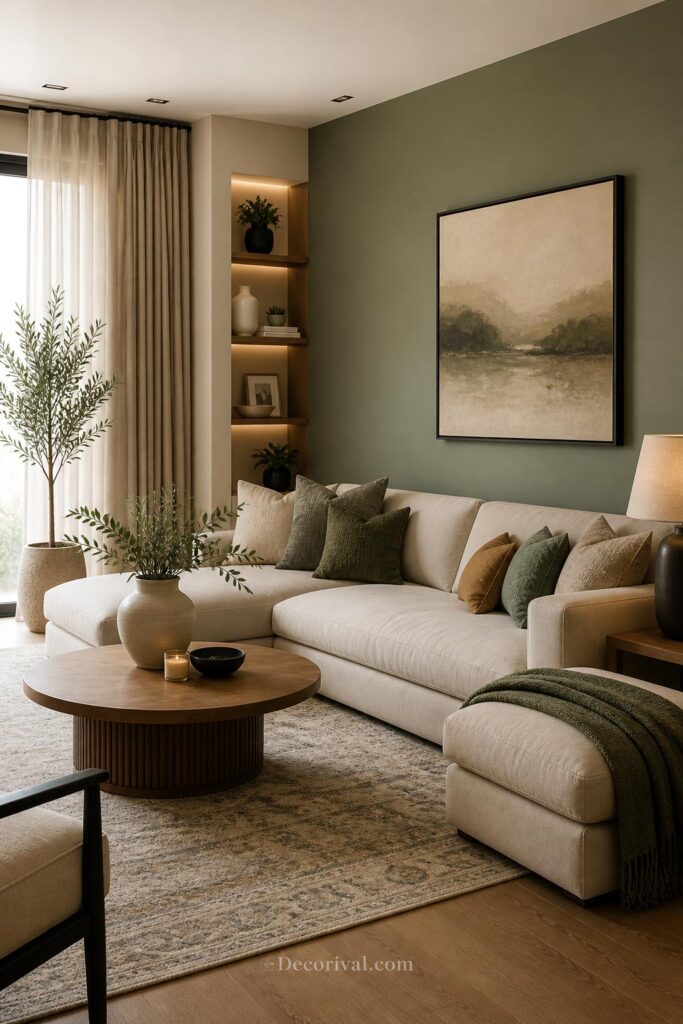
Living Room Color Ideas for Modern Homes
Living Room Furniture Ideas
Furniture decides how your living room feels in daily life. A room may look beautiful, but it can still feel uncomfortable if the sofa is too large, the coffee table is too far away, or storage is missing.
Start with the sofa because it is usually the largest piece. Choose the size based on your room, not just on what looks good online. In a small room, a compact sofa with slim arms and raised legs works better. In a larger room, a sectional or two sofas can create a complete seating area.
The coffee table should be easy to reach from the sofa. A round table works well in small rooms because it improves movement. If you need storage, choose an ottoman or a coffee table with drawers.
Accent chairs can add style, but only use them if the room has enough space. Closed storage keeps the room clean, while open shelves should be styled lightly so they do not look cluttered.
Good furniture should support your lifestyle. For kids, pets, or frequent guests, choose durable fabrics and easy-clean materials. For a relaxing room, prioritize comfort over trends.
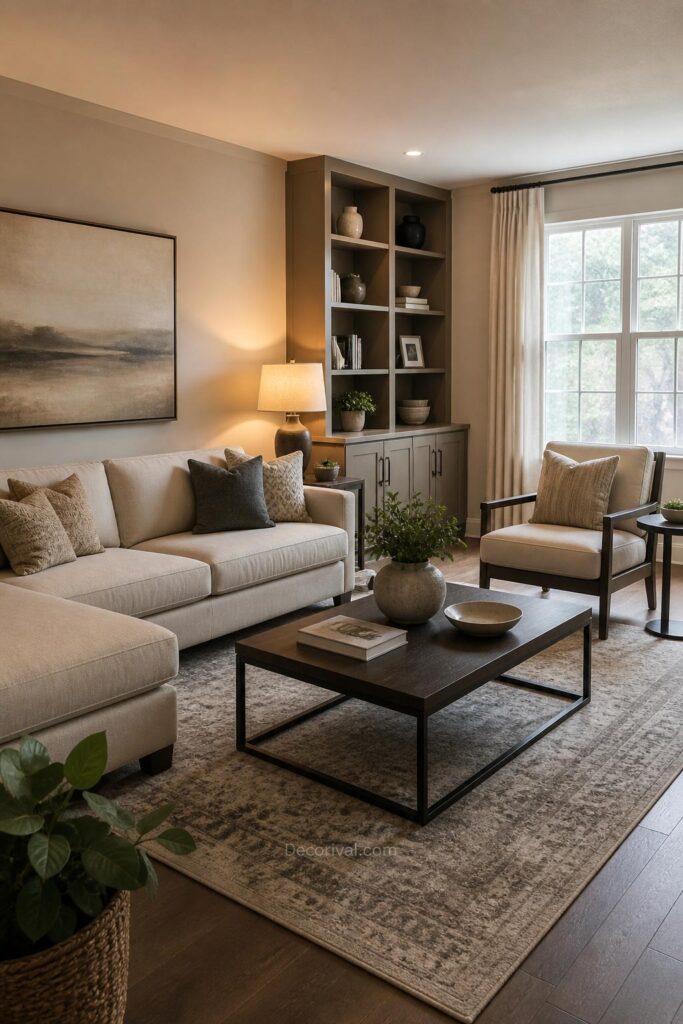
Living Room Furniture Arrangement Ideas
Living Room Lighting Ideas
Lighting can make or break a living room. A room with only one ceiling light often feels flat, even if the furniture and colors are beautiful.
Use layered lighting instead. Ambient lighting brightens the whole room, task lighting helps with reading or working, and accent lighting adds mood.
Ceiling lights, recessed lights, or chandeliers work as ambient lighting. Floor lamps, table lamps, and wall-mounted lights work well for tasks. LED strips, wall sconces, shelf lights, and soft lamps can add warmth and depth.
For a modern living room, warm lighting usually looks better than harsh white lighting. Place lights at different heights, such as one ceiling light, one floor lamp, and one table lamp.
If you want a more elegant feel, lighting is one of the easiest upgrades. Even a simple room can look more polished with the right lamps, ceiling lights, and wall lighting.
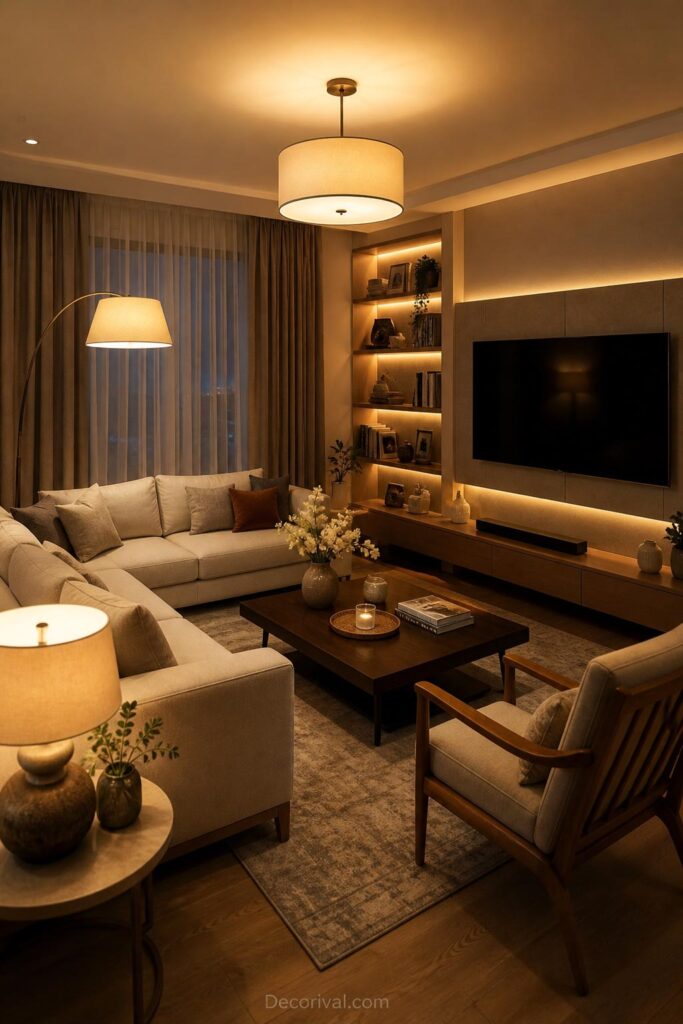
Living Room Lighting Ideas for a Cozy Space
Budget Living Room Design Ideas
You do not need a huge budget to improve your living room. Many small changes can make the space feel cleaner, fresher, and more planned.
Start by rearranging the furniture. Sometimes the room already has good pieces, but they are not placed well. Move the sofa, adjust the rug, clear the walking path, and create a stronger focal point.
Textiles can also change the room quickly. New curtains, cushion covers, throws, or a textured rug can make the space feel warmer. Hang curtains higher and wider than the window to make the room look taller.
Paint is another affordable upgrade. A fresh wall color can make old furniture feel new. You can also try one soft accent wall or simple peel-and-stick wall panels.
Decluttering is free but powerful. Remove items that do not belong in the living room, keep surfaces simple, and use baskets or storage ottomans for everyday things.
For budget-friendly inspiration, you can explore modern living room decor on a budget to see how simple upgrades can still make your living room feel stylish.
Other easy ideas include changing lampshades, adding a mirror, styling the coffee table, using removable wallpaper, updating cabinet handles, or creating a simple gallery wall.
A good Living Room Design Guide should remind you that budget design is not about making the room look fake-expensive. It is about making the space feel intentional, clean, and comfortable.
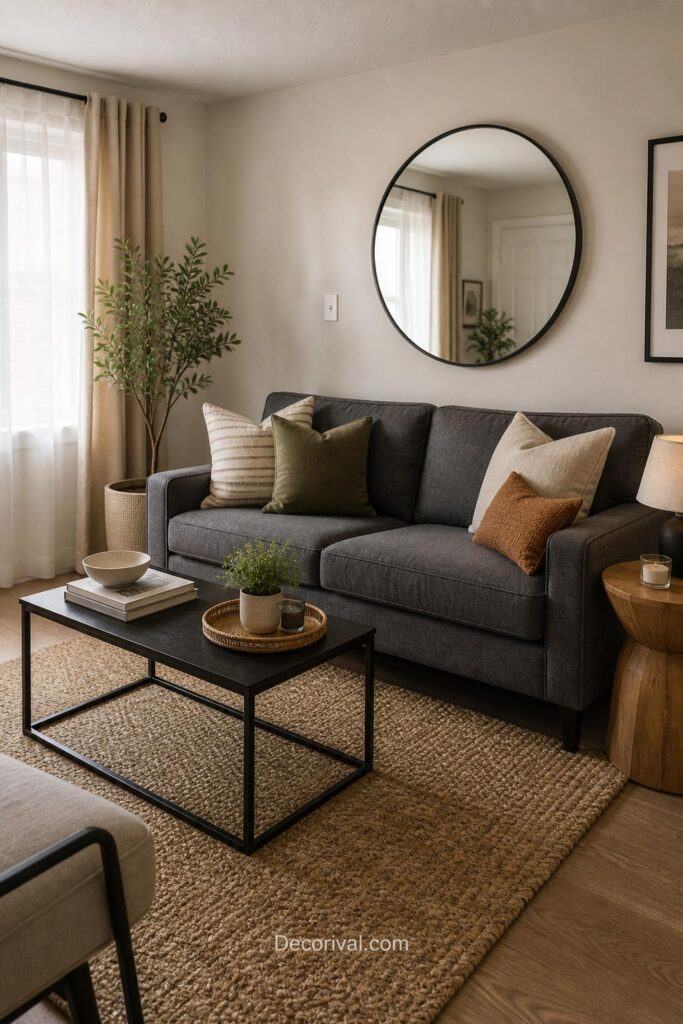
Budget Living Room Design That Looks Stylish
Luxury Living Room Design Ideas
Luxury living room design is not only about expensive furniture. A room feels luxurious when it looks thoughtful, comfortable, and well-balanced.
Soft luxury works especially well in modern homes because it feels elegant without looking too flashy. It usually uses neutral colors, layered textures, quality lighting, and clean furniture.
Start with symmetry. Matching lamps, balanced seating, or centered artwork can make the room feel more polished. Use a large rug that fits under the front legs of the sofa and chairs, because a small rug can make even nice furniture look disconnected.
Curtains also matter. Choose curtains that touch the floor and hang them close to the ceiling to make the room feel taller. Then add texture through linen, velvet, boucle, wood, stone, glass, or metal.
The TV wall can look elegant when it is kept simple. Wall panels, floating cabinets, hidden wires, and soft lighting can make the area feel more refined without overcrowding it.
If you want a more elevated look, you can explore luxury living room ideas to see how simple upgrades can make a space feel more polished.
Luxury is also about restraint. Too much shine, too many gold accents, or too many statement pieces can make the room feel less elegant. Focus on one or two standout details and keep the rest calm.
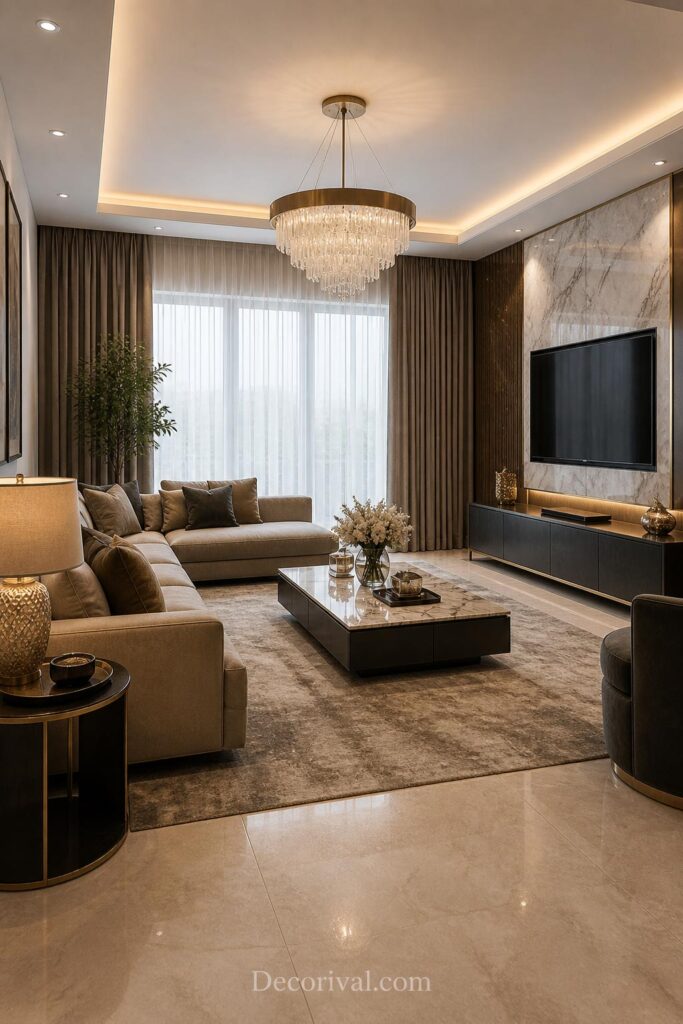
Luxury Living Room Design with Elegant Details
Living Room Wall Decor Ideas
Walls can make a living room feel finished or incomplete. You may have a good sofa, rug, and coffee table, but if the walls look empty or poorly styled, the room can still feel unfinished.
Wall decor should support the room, not overpower it. Start with one main wall, such as the wall behind the sofa, the TV wall, or a blank wall near the seating area.
A large artwork is one of the easiest choices because it creates a focal point without making the wall look busy. If you prefer a personal touch, a gallery wall can also work well, but keep the frames consistent so it feels clean.
Mirrors are useful in small rooms because they reflect light and make the space feel larger. Place a mirror where it reflects something nice, like a window, plant, lamp, or artwork.
Floating shelves, wall panels, and neutral wallpaper can also add depth. Just avoid overfilling shelves or adding too many small pieces around the TV. A good wall should make the room feel complete, not crowded.
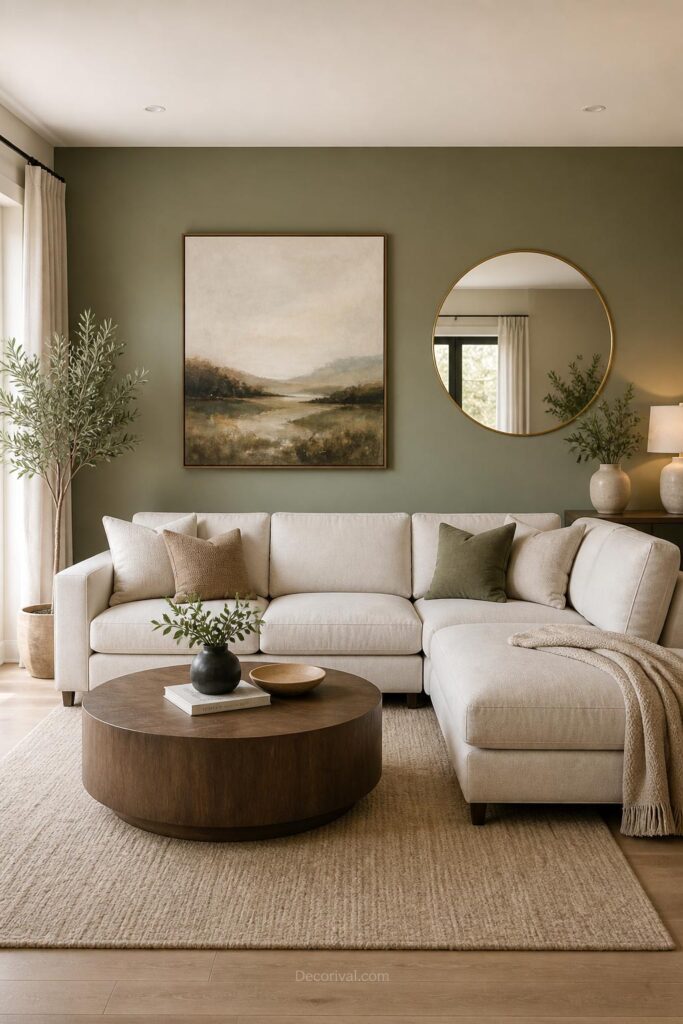
Living Room Wall Decor Ideas for a Finished Look
Living Room Trends for 2026
Living room trends in 2026 are moving toward comfort, warmth, and calm design. People want homes that feel stylish but still easy to live in.
Soft minimalism is one of the biggest directions. It keeps the clean look of minimalism but adds warmer colors, softer shapes, and cozy textures.
Scandinavian neutrals are also popular. Beige, cream, warm white, light wood, and soft grey create a peaceful base that works in both small and large living rooms.
Curved furniture is another trend to watch. Rounded sofas, oval coffee tables, curved accent chairs, and soft-edge decor make the room feel more relaxed.
Natural materials are also important. Wood, stone, rattan, linen, wool, clay, and woven textures bring warmth to modern interiors. Colors like sage green, warm brown, muted terracotta, soft blue, and earthy neutrals also fit this direction.
LED ceiling details and modern TV wall designs are still popular, but the look is becoming softer. Instead of harsh lighting, many homes are using warm, hidden, and layered lighting.
A practical Living Room Design Guide should treat trends carefully. Do not redesign your entire room just because something is popular. Choose ideas that match your lifestyle and can stay beautiful for years.
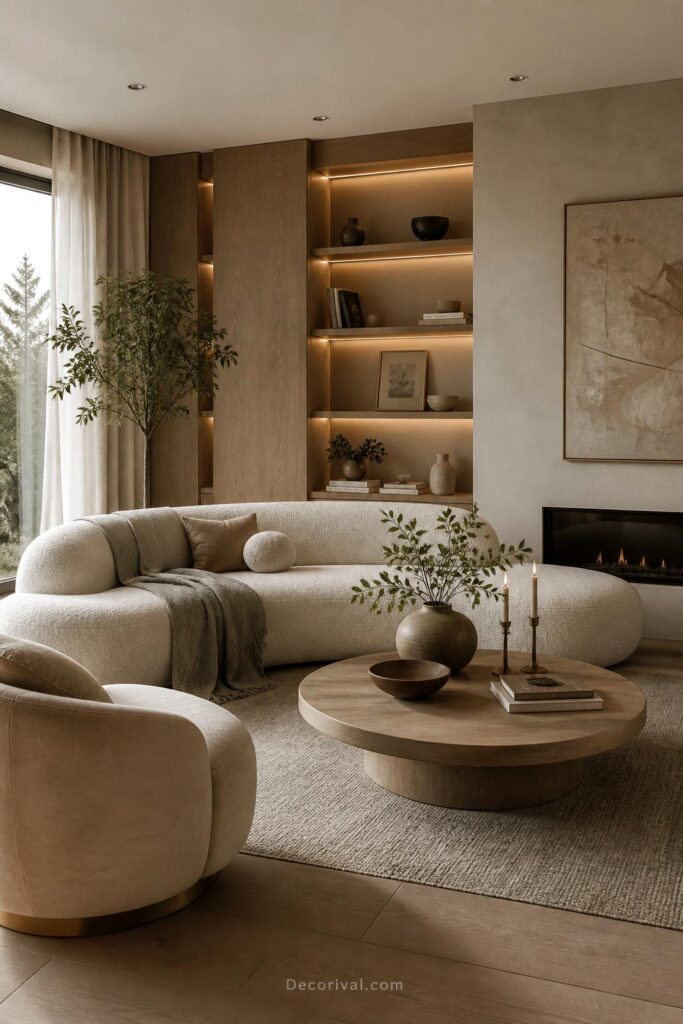
Living Room Trends 2026 Inspiration
Common Living Room Design Mistakes to Avoid
Even a beautiful living room can feel wrong if a few basic mistakes are ignored.
One common mistake is choosing the wrong rug size. A rug that is too small makes the furniture look disconnected. Try to choose a rug large enough to sit under the front legs of the sofa and chairs.
Another mistake is using only one light source. A single ceiling light can make the room feel flat. Add lamps, wall lights, or accent lighting for warmth.
Too much furniture is also a problem. Every room needs breathing space. If walking around the room feels difficult, remove or replace something.
Many people also choose paint colors too early. It is usually better to plan the main furniture and rug first, then choose the wall color.
Avoid copying a design photo exactly. Your room has different lighting, size, windows, and lifestyle needs. Use inspiration, but adapt it to your own space.
Also, do not ignore storage. A living room without storage quickly becomes messy, especially when remotes, blankets, books, toys, and chargers are used daily.
A strong Living Room Design Guide should help you avoid these mistakes before spending money, so the room feels better planned from the start.
Living Room Design Checklist
Before you finalize your space, pause and look at the room as a whole. A good living room should not only look nice in photos. It should feel comfortable, easy to move through, and practical for daily life.
Start with the layout. Walk through the room and notice if movement feels natural. The sofa should fit the space without making it feel cramped, and the rug should be large enough to anchor the seating area.
Next, check the visual balance. The room should have a clear focal point, such as a TV wall, coffee table setup, window, or statement piece. The colors should feel connected, not like they are competing with each other.
Storage is also important. If everyday items do not have a proper place, the room will quickly feel cluttered. Lighting should also come from more than one source, so the space feels soft and comfortable in the evening.
Look at the finishing details too. Curtains should be hung slightly higher to make the room feel taller, and wall decor should feel balanced instead of empty or overcrowded.
A simple Living Room Design Guide checklist should help you answer one final question: Does this room feel comfortable for the way you actually live?
If most of these elements feel right, your living room is already on the right track.
FAQs About Living Room Design
What is the best layout for a living room?
The best layout depends on the room size, shape, and main purpose. In most homes, the sofa should face the main focal point, such as a TV wall, window, fireplace, or seating area, while leaving enough space to move around comfortably.
How can I make my living room look modern?
Use clean furniture, a simple color palette, layered lighting, minimal clutter, and balanced decor. Modern living rooms usually look best when the space feels open, practical, and not overdecorated.
What colors are best for a small living room?
Light colors work best for small living rooms. Warm white, cream, beige, soft grey, pale sage, and light taupe can make the room feel bigger and calmer. You can add depth with wood tones, plants, or black accents.
How do I decorate a living room on a budget?
Start by rearranging furniture, decluttering, changing cushion covers, adding curtains, using a rug, improving lighting, and styling the coffee table. Small changes can make a living room feel more planned without a large budget.
Final Thoughts
A beautiful living room does not come together by adding random furniture and decor. It comes from thoughtful decisions where layout, colors, furniture, lighting, and style all work in harmony.
This Living Room Design Guide gives you a clear and simple way to plan your space without feeling overwhelmed. Start with the layout, choose a direction that matches your style, pick colors that feel right for your home, and build around practical furniture. Once the foundation is set, lighting and decor bring everything together.
Your living room does not need to look perfect or staged. It should feel comfortable, balanced, and personal to you. When each element has a purpose, and nothing feels forced, the space naturally starts to feel complete.
If you want more practical ideas and real home inspiration, you can explore Decorival.com and continue building a space that truly feels like your own.